

PLAN • Emergency Funds
Why Every Investor Needs an Emergency Fund First
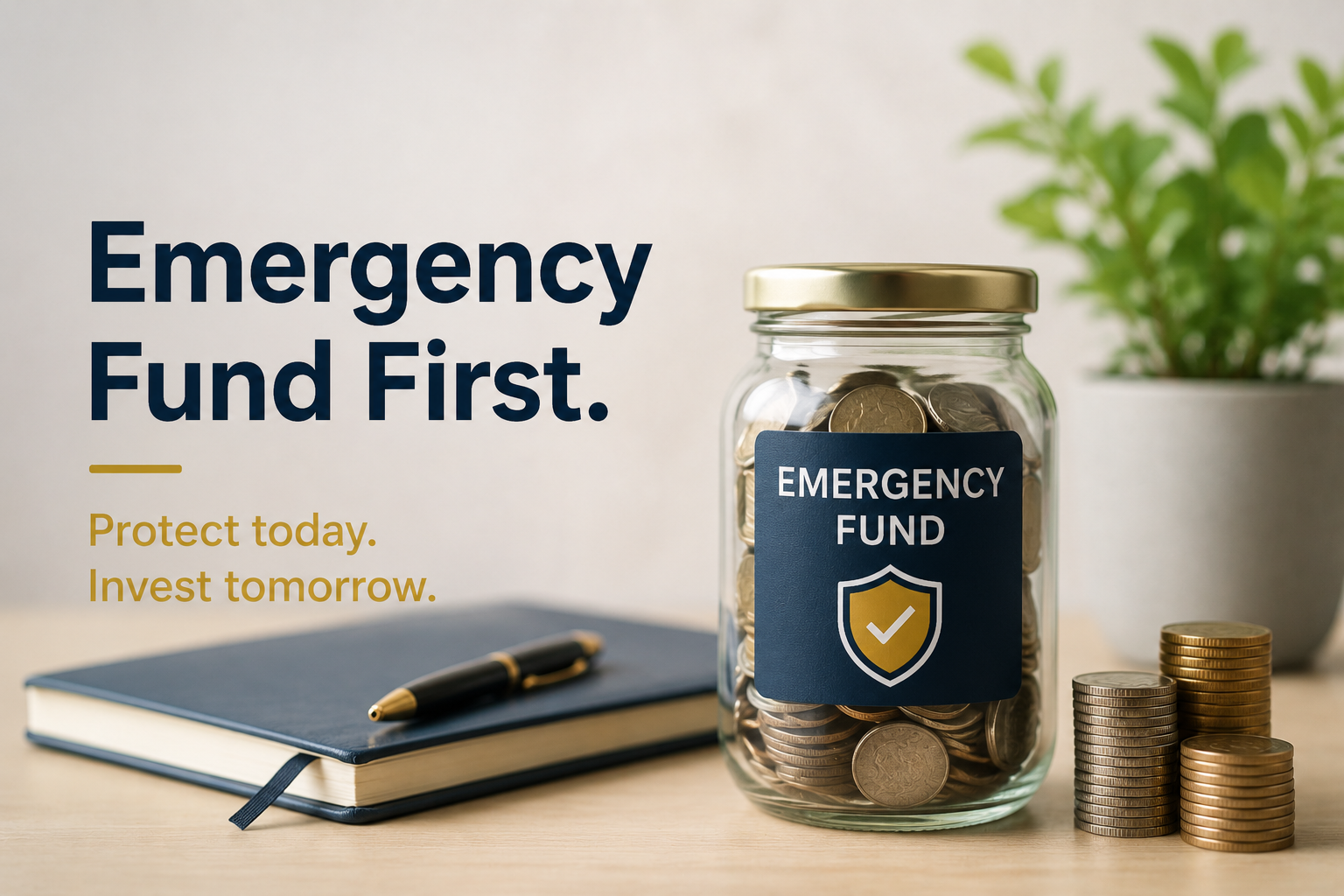
Have you ever had an emergency hit you just when your finances were beginning to improve? One medical bill, one family crisis, one delayed salary, one urgent repair — and suddenly the money you planned to save or invest disappears. That is why an emergency fund is not just a nice idea. It is the protection that keeps your financial journey from being interrupted every time life happens.
Have You Ever Been Forced to Borrow Because of an Emergency?
Many people only understand the real value of an emergency fund after an emergency has already hit them. Before that moment, it can feel like money sitting idle. You may even think, “Why should I keep money aside when I could invest it and earn a return?”
But then life happens. A medical bill comes. A close family member needs urgent support. Your car breaks down. A business payment delays. A funeral contribution is required. Your salary comes late. Suddenly, the question is no longer about returns. The question becomes, “Where do I get money today?”
This is where many people rush into expensive debt. In Zambia and many other African markets, borrowing in an emergency can be painful. You may not easily get a personal loan below 28% interest, and payday loans or informal money lenders can be even more expensive.
And once that debt starts, it does not just solve the emergency. It creates a new problem. Your future income is now tied to repayments. The money you wanted to invest is swallowed by interest. The progress you were building gets pushed backwards.
PATH Principle
An emergency fund protects your investment journey from being interrupted by life’s unexpected demands. It gives your long-term money room to keep growing.
The Real Cost of Not Having an Emergency Fund
When you do not have an emergency fund, emergencies become more expensive than they should be. The original problem may be small, but the solution becomes costly because you are forced to borrow under pressure.
Have you noticed how financial pressure reduces your options? When you need money urgently, you do not always have time to compare interest rates, negotiate terms, or think calmly. You take what is available. And what is available in an emergency is often expensive.
The emergency itself may last one day. But the debt created by that emergency can follow you for months.
This is how many people remain unable to invest consistently. It is not always because they do not earn income. It is because every few months, something happens that pulls money away from their investment plan.
You start the year with good intentions. You say, “This year I will invest every month.” Then an emergency happens in February. Another one comes in May. A family obligation appears in August. By December, you realise the whole year passed and your investments never really grew.
The African Reality: Emergencies Are Often Family Emergencies
In our context, emergencies are not always personal. Sometimes you are financially stable, but someone close to you is not. A parent may need support. A sibling may call. A relative may need medical help. A funeral may require urgent contributions. A young person in the family may need school fees.
Are you the person people call when there is a crisis? Are you the breadwinner, the first-born, the reliable one, the one who is expected to “find something” when the family is under pressure?
If that is your reality, then your emergency fund cannot only be about you. It must reflect the life you actually live. Many Africans carry family responsibilities that do not appear neatly in a budget, but they still affect money.
Practical Insight
If people depend on you, your emergency fund should be bigger than someone who only supports themselves. Your financial plan must be honest about your real responsibilities.
This does not mean you must solve every problem for everyone. It means you need a financial buffer so that helping others does not destroy your own long-term plan.
What Is an Emergency Fund Really For?
An emergency fund is money set aside specifically for unexpected financial pressure. It is not money for holidays. It is not money for shopping. It is not money for upgrading your phone. It is not money for planned expenses you forgot to budget for.
It is a safety net. Its job is to protect you from panic borrowing, forced selling, and financial disruption.
An emergency fund is not designed to make you rich. It is designed to stop emergencies from making you poorer.
This is why the money must be separate from your normal spending money. If it sits in the same account you use every day, it will slowly disappear through small withdrawals. You may not even notice it happening.
Why Investors Need Emergency Funds Even More
If you are investing, an emergency fund becomes even more important. Why? Because investments are not always suitable for sudden cash needs.
Shares may be down when you need money. Bonds may be better held for the long term. Property may not sell quickly. Unit trusts may take time to process. Even when an investment is good, it may not be the right source of emergency cash.
It Protects Your Investments
You avoid selling long-term assets too early simply because you need urgent cash.
It Reduces Expensive Debt
You are less likely to run to high-interest loans, payday lenders, or informal borrowing.
It Protects Future Contributions
Your monthly investment savings are less likely to be eaten by emergency debt repayments.
Think of your emergency fund as a wall around your investments. It does not replace investing. It protects investing.
How Much Should You Keep?
A useful starting point is to build an emergency fund equal to three to six months of essential living expenses. This does not mean three to six months of your full salary. It means the amount you need to survive if your income is interrupted.
Your essential expenses may include rent, food, transport, utilities, school fees, medical needs, debt repayments, and basic family responsibilities.
| Your Situation | Suggested Target | Why It Matters |
|---|---|---|
| You have a stable salary and few dependants | 3 months of essential expenses | Your income is more predictable |
| You run a business or earn irregular income | 6 months or more | Your income may rise and fall |
| You are a breadwinner | 6 months or more | More people depend on your income |
| You already have high debt repayments | At least 3–6 months | Missed payments can create serious pressure |
Do not be discouraged if the number looks too big. You do not need to build the full amount overnight. Start with one month. Then build toward three months. Then six.
Where Should You Keep the Money?
Your emergency fund should be safe, accessible, and separate. This is not the money you use to chase the highest return. It is the money you use to protect yourself from financial shocks.
Keep It Safe
Do not expose emergency money to investments that can fall sharply in value.
Keep It Accessible
You should be able to access it reasonably quickly when a genuine emergency happens.
Keep It Separate
Do not mix it with your everyday spending account. Separation protects discipline.
A separate savings account or a low-risk money market-type option may work, depending on what is available to you. The important thing is that the money should not be too easy to spend casually, but also not too difficult to access when you truly need it.
What Counts as a Real Emergency?
This is where many people struggle. If you do not define emergencies clearly, everything starts looking like an emergency.
A sale at the mall is not an emergency. A holiday is not an emergency. A phone upgrade is not an emergency. A planned expense you forgot about is also not an emergency.
| Real Emergency | Not an Emergency |
|---|---|
| Sudden medical cost | Weekend entertainment |
| Unexpected job loss | New clothes for an event |
| Urgent home repair | Phone upgrade |
| Essential car repair | Holiday spending |
| Urgent family crisis | Known annual expenses |
How to Start Building Your Emergency Fund
Have you been waiting until you have “extra money” before you start? That may be the reason you have not started yet. Emergency funds are not built from leftovers. They are built from intention.
Know Your Essential Expenses
Write down the minimum amount your household needs each month to function.
Start With One Month
Do not wait until you can build six months. Begin with one month of expenses.
Open a Separate Account
Keep the money away from your daily spending account to avoid casual withdrawals.
Automate It
Set a standing order so money moves into your emergency fund before you spend.
Grow It Gradually
Move from one month to three months, then toward six months depending on your life.
Rebuild After Use
If you use it for a genuine emergency, rebuild it before increasing investment risk.
Final Thoughts: Protect Before You Grow
Do you want to invest consistently? Do you want your bonds, shares, unit trusts, or retirement investments to grow without constant interruption? Then you need protection.
An emergency fund may not feel exciting. It may not give you the highest return. It may not sound impressive when people are discussing investment opportunities. But it quietly protects everything you are trying to build.
Before you chase returns, build stability. Before you take more risk, create protection. Before you invest aggressively, make sure one emergency will not force you back into expensive debt.
In the PATH Investing Framework™, planning comes before action because your financial journey needs a strong foundation. The emergency fund is one of those foundations.
Build Your Financial Foundation First
Explore practical online courses and resources from Insight Partners Africa designed to help you plan, act, track, and harvest your financial journey with confidence.
Explore E-Learning Courses