

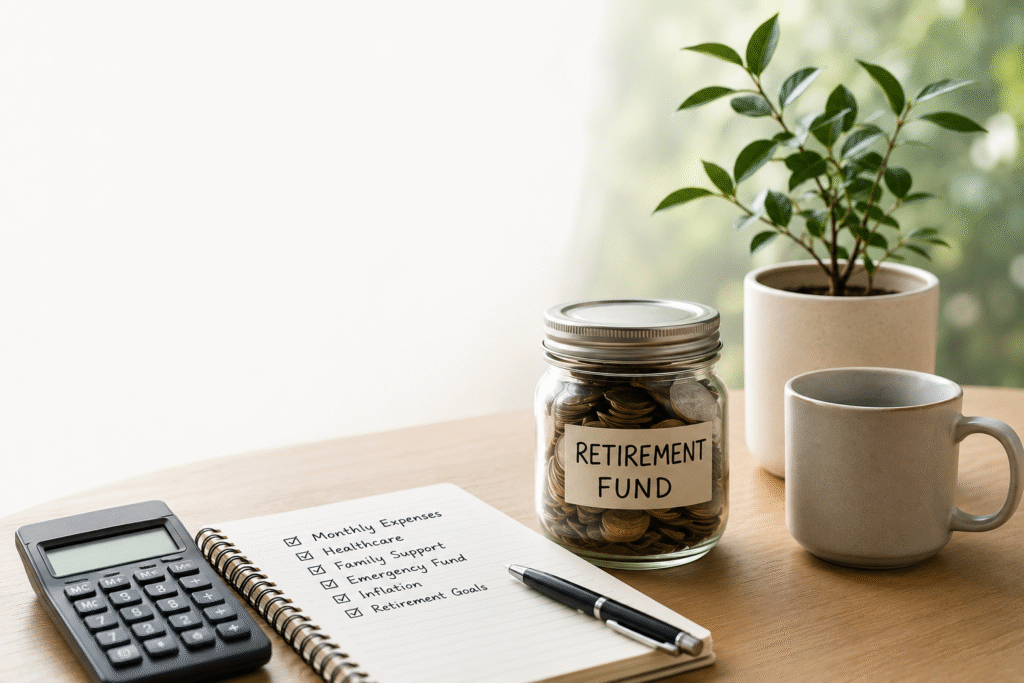
Many people in Zambia ask, “How much money do I need to retire?” But the better question is this: “How much monthly income will I need when my salary stops?”
Retirement is not just about having a pension, a lump sum, a house, or a few investments. It is about whether your money can continue supporting your life when active employment income is no longer there.
Why This Question Matters So Much in Zambia
In Zambia, retirement is rarely just a personal financial event. It often affects the whole household.
Many retirees are still expected to support children, grandchildren, relatives, church obligations, funerals, and community needs. At the same time, the cost of living continues to rise, medical needs become more important, and pension income may not fully replace a person’s former salary.
This is why retirement planning must go beyond simply waiting for NAPSA, pension benefits, or a final payout.
NAPSA’s official retirement ages are 55 for early retirement, 60 for normal retirement, and 65 for late retirement. That means many people may spend 20, 25, or even 30 years in retirement after employment ends.
Start With the Lifestyle You Want to Fund
Before you calculate how much money you need, you must first define the life you want your money to support.
Do you want a basic retirement that simply covers essentials? Do you want a comfortable retirement with decent healthcare, family support, and lifestyle flexibility? Or do you want a financially independent retirement where you can travel, give, invest, and support your family without fear?
Build Your Retirement Budget First
Your retirement number begins with your monthly budget. Do not guess. Write down what it would realistically cost to run your life after retirement.
| Retirement Expense | Example Monthly Amount |
|---|---|
| Food and household supplies | K6,000 |
| Utilities and communication | K2,500 |
| Transport and fuel | K4,000 |
| Medical costs and insurance | K3,500 |
| Family support | K4,000 |
| Personal and lifestyle spending | K3,000 |
| Emergency reserve allocation | K2,000 |
| Total estimated monthly cost | K25,000 |
This does not mean every retiree needs K25,000 per month. It simply shows how quickly retirement expenses can add up when you include real-life responsibilities.
Separate Needs From Wants
A good retirement budget should separate essential expenses from flexible expenses.
Essential expenses
These include food, housing, utilities, transport, healthcare, insurance, and basic family responsibilities.
Flexible expenses
These include travel, entertainment, gifts, lifestyle spending, hobbies, and non-essential support.
Legacy expenses
These include support to children, grandchildren, donations, estate planning, and wealth transfer goals.
This matters because when markets are difficult or inflation rises, flexible expenses can be adjusted. Essential expenses cannot easily be removed.
Calculate Your Retirement Income Gap
Once you know your expected monthly expenses, compare that figure with your expected guaranteed income.
Guaranteed income may include pension income, NAPSA benefits, rental income, annuity income, or other predictable cash flow.
| Item | Amount |
|---|---|
| Expected monthly retirement expenses | K25,000 |
| Expected monthly pension/NAPSA/rental income | K9,000 |
| Monthly income gap | K16,000 |
In this example, the retiree does not need investments to produce the full K25,000 per month. They need investments to produce the K16,000 gap.
Convert the Monthly Gap Into an Investment Target
Once you know the monthly gap, convert it into an annual figure.
If the income gap is K16,000 per month, the annual income gap is:
Now ask: how much capital would be required to produce K192,000 per year sustainably?
One simple planning method is to divide the annual income gap by an assumed withdrawal rate.
| Planning Item | Amount |
|---|---|
| Annual income gap | K192,000 |
| Assumed withdrawal rate | 5% |
| Estimated capital required | K3,840,000 |
This means a retiree with a K16,000 monthly income gap may need approximately K3.84 million invested, assuming a 5% withdrawal rate.
This is not a perfect answer. It is a starting estimate. The actual figure depends on investment returns, inflation, tax, healthcare needs, life expectancy, and whether the retiree wants to preserve capital or gradually spend it down.
Do Not Ignore Inflation
One of the biggest dangers in retirement is that your income may stay the same while prices keep rising.
A monthly retirement budget that feels comfortable today may not be enough ten years from now. This is why your retirement plan must include investments that can help protect purchasing power over time.
Inflation changes the retirement calculation
If your expenses rise but your income does not, your retirement lifestyle slowly weakens. You may still be receiving money every month, but that money buys less than it used to.
Healthcare Must Be Planned Separately
Healthcare is one of the most underestimated retirement expenses.
Many people plan for food, transport, and utilities, but forget that medical expenses often rise with age. Medication, check-ups, specialist visits, medical insurance, hospital bills, and emergency care can place pressure on retirement income.
A serious retirement plan should have a dedicated healthcare provision.
Family Support Must Also Be Budgeted
In Zambia, many retirees continue supporting family members long after employment ends.
This support may be necessary and meaningful, but it must be planned. Unplanned generosity can weaken retirement security.
A practical approach is to decide in advance how much family support your retirement income can safely handle.
Build Multiple Retirement Income Sources
Depending on one source of retirement income is risky.
A stronger retirement plan may combine several sources:
- NAPSA or pension income
- Government bond interest
- Unit trust withdrawals
- Dividend income from shares
- Rental income
- Business income
- Money market income
- Cash reserves
The goal is not to own many investments randomly. The goal is to build a coordinated retirement income system.
The Three Numbers Every Retiree Must Know
| Retirement Number | Why It Matters |
|---|---|
| Monthly retirement expenses | Shows the lifestyle you need to fund. |
| Guaranteed monthly income | Shows what is already covered. |
| Monthly income gap | Shows what your investments must provide. |
Once you know these three numbers, retirement planning becomes more practical and less emotional.
Final Thoughts
The question is not simply, “How much money do I need to retire?”
The better question is:
That question forces clarity.
It helps you move from hope to planning. It helps you understand whether your pension will be enough, whether your investments must do more work, and whether your current lifestyle is aligned with your retirement reality.
Retirement becomes less frightening when you turn it into numbers.
And once you know your numbers, you can begin building a retirement income strategy that supports your life with confidence, dignity, and peace of mind.
Ready to Build Your Retirement Income Plan?
The PATH Investing Framework™ helps investors move from saving and investing to building a structured retirement income system that supports long-term financial independence.
Explore the PATH Investing Framework™



One Comment
One of the biggest mistakes many people make is assuming retirement is simply about reaching retirement age or receiving a pension payout. In reality, retirement is an income planning challenge. Your salary eventually stops, but your expenses continue — and in many cases, they increase.
In Zambia, retirement planning must also account for inflation, healthcare costs, family responsibilities, and the possibility of living much longer than expected. This is why understanding your retirement income gap is so important.
What concerns do you personally have most about retirement planning in Zambia?